 STRUXA
Making an object lighter sounds simple: use less material. The difficult part is deciding what can leave without asking the remaining structure to do the wrong job.
Struxaform™ Technology approaches that question through geometry. Its patent-pending open lattice places material where support matters and leaves open space where it does not. The goal is not minimal material at any cost. It is useful material, deliberately arranged.
That is a more demanding version of “less.”
Weight is set early in the design
Lightness can be treated as a late-stage target: thin a wall, reduce a feature, or swap one component for another. But by then, the overall form and construction method may already carry unnecessary bulk.
Struxa starts earlier. The splint is conceived as a lattice rather than a solid shell. Each connected element belongs to the structural plan, while the spaces between those elements remain open. Weight is therefore shaped by the architecture itself.
This matters on the hand because even a small product participates in nearly every movement. A finger rises above a keyboard, closes around a utensil, steadies a notebook, or reaches into a pocket. The less unnecessary volume the splint adds, the less product there is to manage during those ordinary motions.
Material efficiency is not a sustainability claim
“Using less” can quickly become vague environmental language. Struxa’s confirmed product information supports a narrower and more concrete point: the open lattice removes material where it is not needed to keep the splint light.
That is material efficiency as a design principle. It says nothing by itself about total environmental impact, energy use, lifecycle, or recyclability. Those claims would require evidence beyond the visible geometry.
The value here is direct and physical. Selective material placement reduces the amount of structure occupying the hand while preserving the lines designed to provide general-purpose support.
For a reader, the useful takeaway is equally selective: the confirmed benefit is lightness through purposeful geometry, not a broader lifecycle promise.
Less material can create more than lightness
Removing unnecessary mass also creates openings. Those openings allow air to move across the skin rather than meeting a closed shell. In Struxaform, weight and breathability come from the same architectural decision.
The low-profile form follows the same logic. A design that is not trying to hide a solid core beneath extra layers can stay closer to the finger. Lightness, airflow, and profile are not three decorations placed on the product. They are related outcomes of how the structure is organized.
This is one reason material efficiency is more interesting than simply quoting a weight. A number can describe the finished object, but it cannot explain why the object has the form it does. The lattice makes the reasoning visible.
One piece reduces the parts conversation
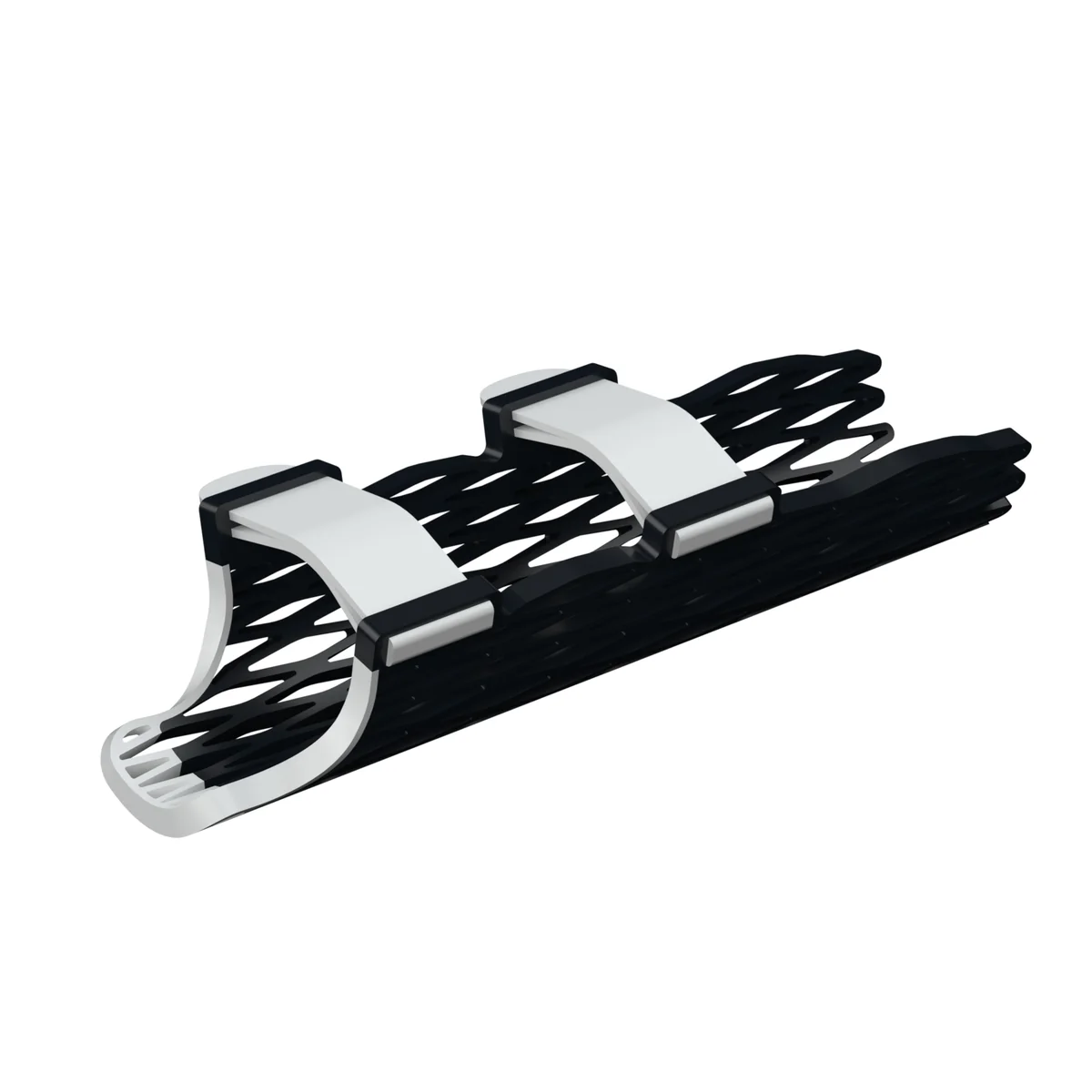
Struxa splints are additively manufactured as a single continuous structure. That does not eliminate every product decision, but it changes the starting point. Instead of building the central body from multiple rigid components, the open-lattice structure is produced as a connected form.
For the designer, this keeps attention on the relationship between geometry and use. Where should the structure run? Where should it open? How close can it remain to the finger while retaining the intended support architecture?
For the person wearing it, the result is simpler to understand: an open, washable structure designed for everyday contact, with no bulky foam or bent-metal body defining the experience.
A useful comparison question
When comparing finger support, “How light is it?” is useful, but “How did it become light?” is better.
Was material removed after the form was established, or was the form designed to avoid unnecessary material from the start? Does openness contribute to the working structure, or is it a surface treatment? Does the product remain close to the hand, or does it need added bulk to hold separate elements together?
These questions reveal design intent without relying on unsupported performance promises. They also help explain why two objects that serve a similar general purpose can feel very different in daily routines.
Restraint is an engineering choice
The phrase “nothing extra” can sound aesthetic, but in Struxaform it is structural. The lattice gives each element a reason to exist and gives open space an equally deliberate role.
That restraint is what makes a lightweight finger splint more than a smaller version of a traditional one. It is a different way of deciding what the product needs to be.