 STRUXA
Look closely at a Struxa splint and the first thing you notice may be the open pattern. Look again and a more useful question appears: what is each part of that pattern doing?
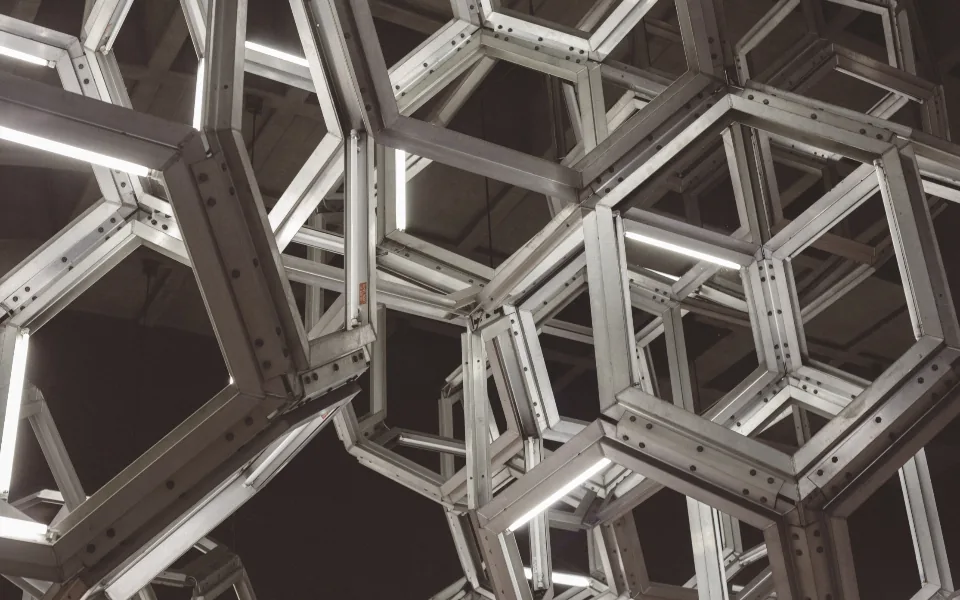
Struxaform™ Technology is an engineered open lattice, printed as one continuous structure. It is not decoration cut into an otherwise complete splint. The lattice is the splint’s architecture, material arranged where support matters, with open space left where additional material would not be useful.
That distinction changes how the product should be read. Instead of seeing holes in a solid object, you begin to see a network of connected paths.
Start with the lines, not the openings
In structural design, geometry determines how material works together. A line can connect one region to another. A curve can follow a form. Repeated elements can share the work across a larger area. The amount of material matters, but its location and relationship to the rest of the structure matter too.
Struxa describes its lattice in similar terms: material is concentrated along the lines that keep a finger supported and steady. Elsewhere, the structure opens up. Every visible strut has a job within the whole.
This is why the lattice should not be understood as a solid shell with pieces removed at random. The digital model defines the structure from the beginning. The pattern, the overall shape, and the areas of openness are designed together.
Open space is part of the specification
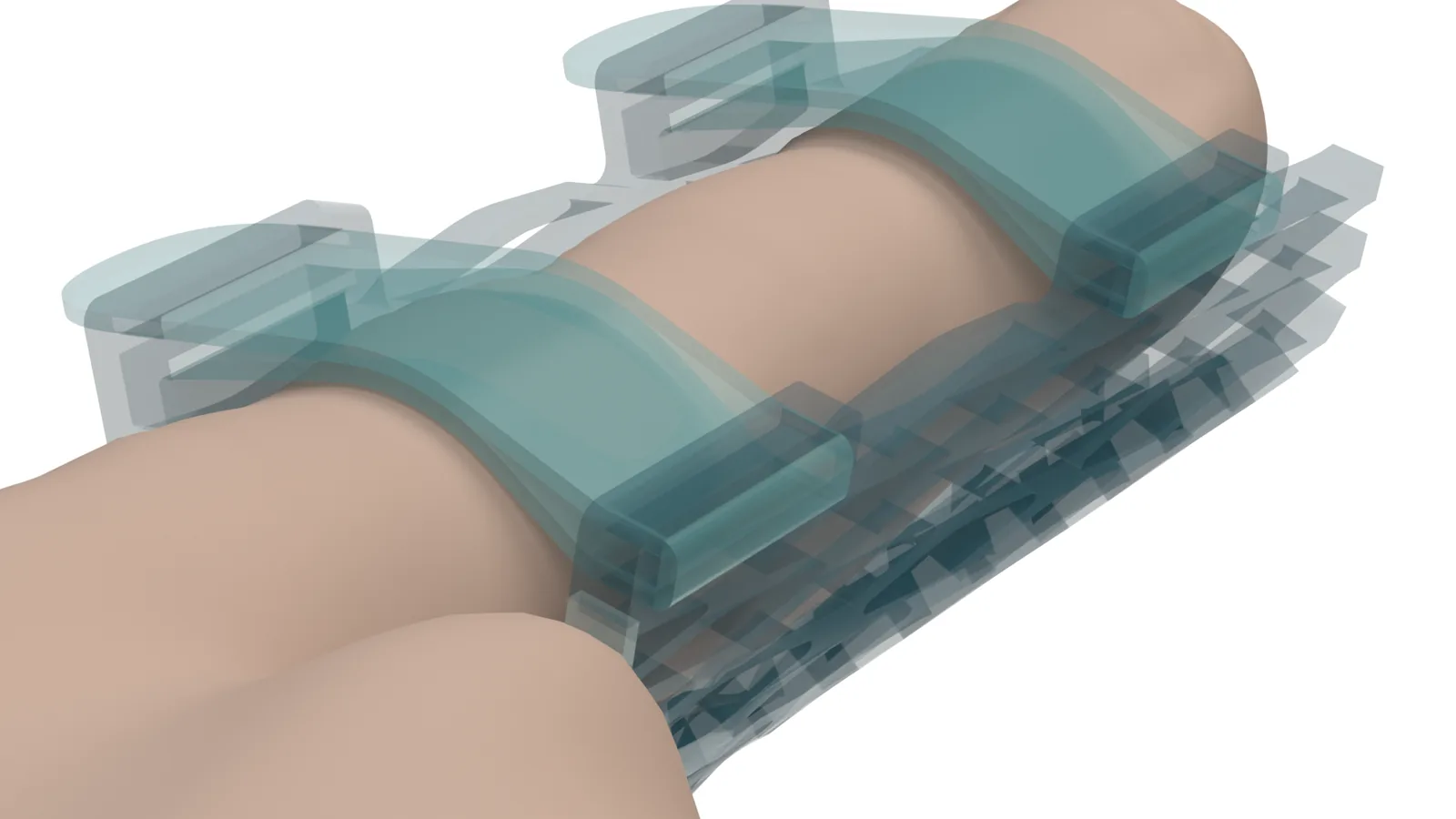
The openings do two things that are easy to understand in everyday use. They allow air to move across the skin, and they keep unnecessary material out of the product.
Neither benefit is an afterthought. A breathable finger splint needs actual paths for air rather than a surface that only looks perforated. A lightweight finger splint needs more than a thin wall; it needs a structure that is selective about where material belongs.
The result is a useful relationship between opposites: structure and openness, contact and airflow, presence and absence. Struxaform holds those conditions in the same geometry.
One network, printed as one structure
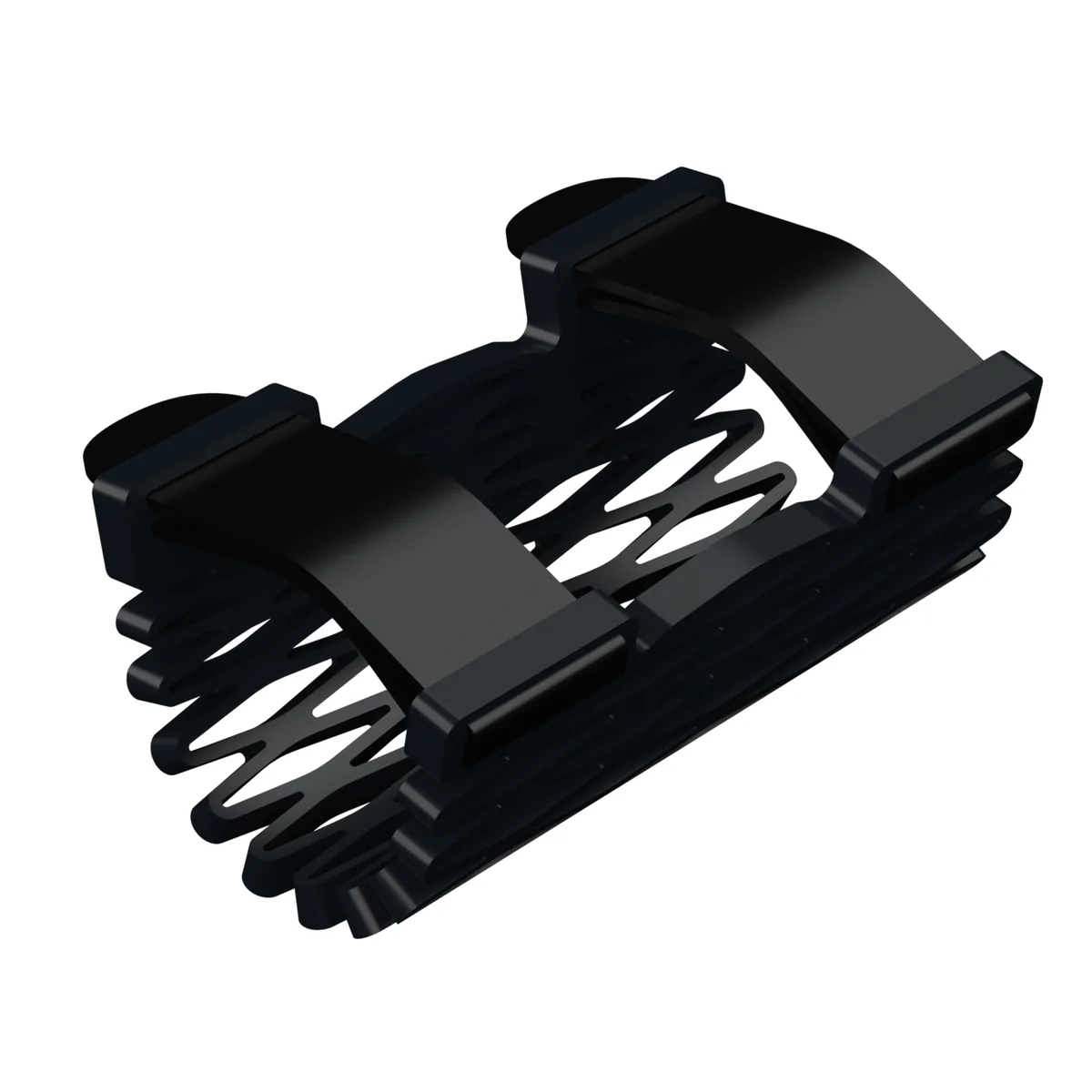
Connections matter in a lattice. If its elements were assembled from many small pieces, each connection would become a separate design and manufacturing question. Struxaform is additively manufactured as one continuous structure, built from a precision digital model one layer at a time.
That manufacturing approach makes the visible geometry possible. The form does not need to be simplified into shapes that are easy to bend from metal or press in a mold. The digital structure can move from model to physical part as a connected whole.
This does not mean every additively manufactured object is automatically well designed. Additive manufacturing provides freedom; engineering decides how to use it. The important point is that Struxaform’s process and its geometry were developed as a system.
A practical way to examine the design
The next time you look at a Struxa splint, on the interactive model or in your hand, try reading it in three passes.
First, follow the connected lines. Notice how the lattice continues through the form rather than appearing as an isolated texture.
Second, look at the openings. Consider where the design creates room for airflow and removes material from the overall structure.
Third, look at the profile. The lattice sits close to the finger rather than building a large shell around it. That low-profile form is part of the same structural decision, not a separate styling move.
You do not need an engineering background to see the logic. The product makes much of its reasoning visible.
The pattern is an explanation
Many products hide their structure beneath covers, foam, or housings. Struxaform puts the architecture on the surface. What you see is not a visual suggestion of lightness or breathability; it is the arrangement that creates them.
That makes the lattice a kind of explanation. It shows where Struxa chose to place structure and where it chose to leave room. In a small object worn on the hand, those choices have immediate consequences for weight, airflow, and how much space the product occupies.
Geometry does the work because geometry is where the decisions live.