 STRUXA
The first successful print is not the end of a digitally manufactured product. It is a physical answer to a digital question, and often the beginning of the next one.
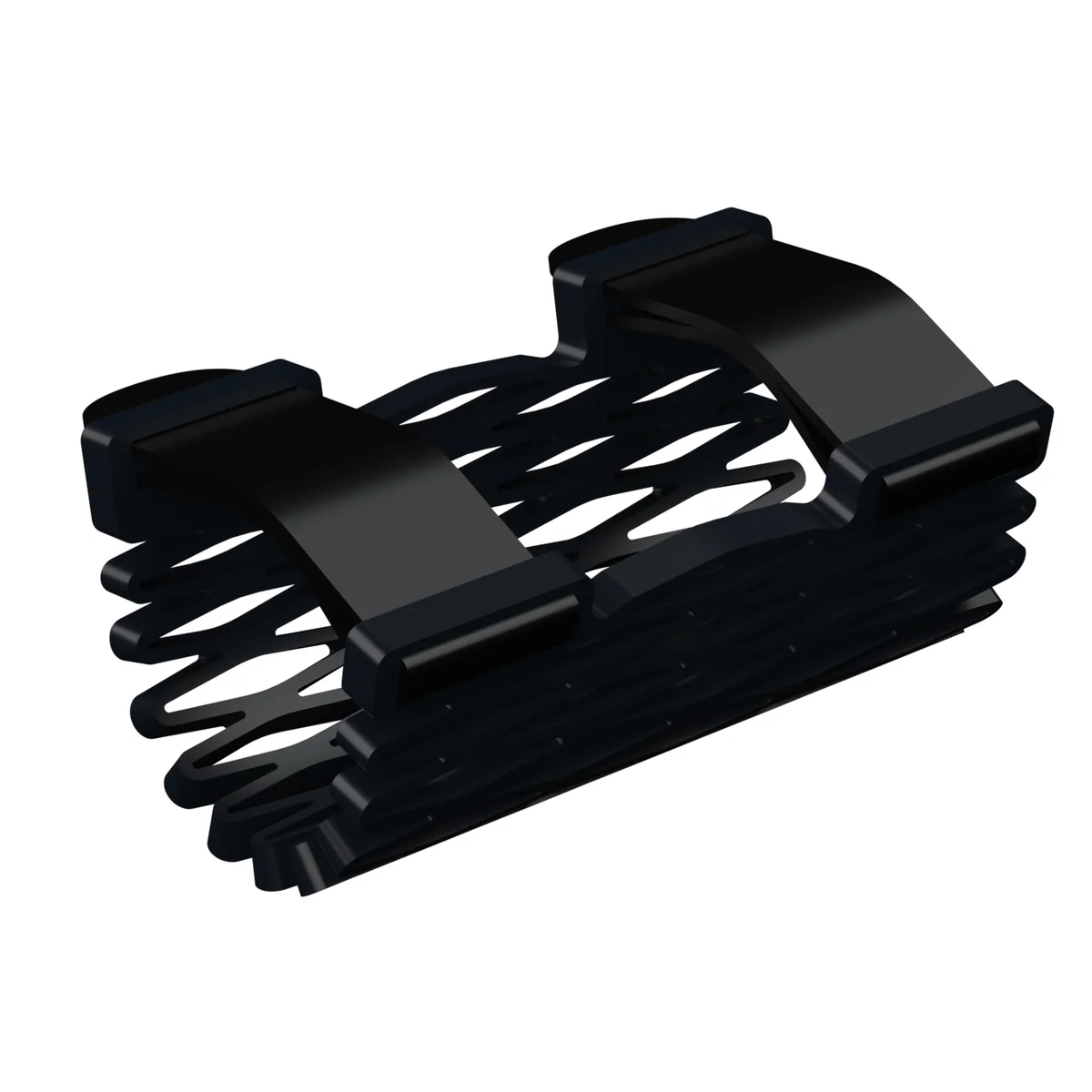
Every Struxa splint begins as a precision 3D model. Struxaform™ Technology turns that model into a continuous open lattice, built one layer at a time through additive manufacturing. The familiar explanation stops there: model, printer, finished part.
The more revealing story is the loop that connects them.
A model is a working definition
For a conventionally fabricated object, design information may be distributed across drawings, tooling, fixtures, assembly instructions, and vendor knowledge. A change can require several of those elements to move together.
In digital manufacturing, the model is a more direct definition of the form. It describes the overall shape and the lattice geometry before the structure exists physically. The printer then builds from that information rather than from a mold shaped like the final product.
This makes the model valuable after the first part has been produced. When a detail is reconsidered, the development conversation can return to the geometry that created it. The next physical version begins with an updated design, not with an attempt to reshape an old tool.
That does not make refinement automatic. Judgment still belongs to the people doing the design, engineering, and prototyping. Digital manufacturing simply keeps the relationship between a decision and its next physical expression unusually close.
The loop gets shorter when the work is nearby
Struxa designs and manufactures in Colorado inside Atlas Product Group. The company describes design, engineering, prototyping, production, packaging, and fulfillment as operating under one roof.
For product development, proximity changes the rhythm of a question. The person working in the model can remain close to the people producing the part. A physical detail can be discussed in the context of the geometry that defined it. Production is not an abstract final step at the far end of a handoff.
This is different from saying that local manufacturing is automatically better in every respect. The confirmed advantage is more specific: Struxa keeps the people and stages involved in the product close enough to maintain a direct refinement loop.
Additive manufacturing preserves complex intent
Struxaform is an open network of connected elements, not a solid body with a decorative pattern. Manufacturing it as one continuous structure allows the digital architecture to remain legible in the finished splint.
That matters because simplification for a different process could change the design’s central idea. A lattice conceived to place material selectively needs a process capable of producing those connected paths and openings together. Additive manufacturing gives Struxa a way to carry that intent from model to part.
It also keeps the product’s major structural story in one place. The lattice, overall form, and open areas are not separate pieces waiting to be assembled into an approximation of the design. They are built as the design describes them.
What a responsible development story leaves out
Behind-the-scenes manufacturing stories often leap from “we can revise quickly” to claims about performance. Those are not the same thing.
A tighter iteration loop explains how a team can move between digital and physical versions. It does not, on its own, establish a test result, certification, medical outcome, or product lifespan. Those conclusions require their own evidence.
The more useful point is procedural: when design, engineering, prototyping, and production are connected, a product can be treated as a continuing body of decisions rather than a drawing thrown over a wall.
The next print is a design conversation
Imagine noticing that a transition in the lattice deserves another look. In a digital loop, the useful questions are concrete. Which part of the model defines that transition? How does it connect to the surrounding structure? What would the revised geometry look like as a complete printed form?
The answer appears in the next iteration. That part can then be handled, viewed, and discussed by the same nearby disciplines. The loop continues without changing the product’s central language: a lightweight, breathable, low-profile structure built from connected geometry.
This is the quieter value of additive manufacturing. It is not only a way to make shapes that would be difficult to produce otherwise. It is a way to keep the product close to its digital reasoning.
Manufacturing as part of the design practice
Struxa’s Colorado production is most meaningful when understood as part of the design practice. The model is not detached from the print floor, and the print floor is not detached from the people refining the model.
The finished splint may be a single continuous structure. Behind it is another kind of continuity: a loop from design to physical part and back again.