 STRUXA

Some product categories change loudly. Others remain familiar for so long that their conventions begin to look inevitable.
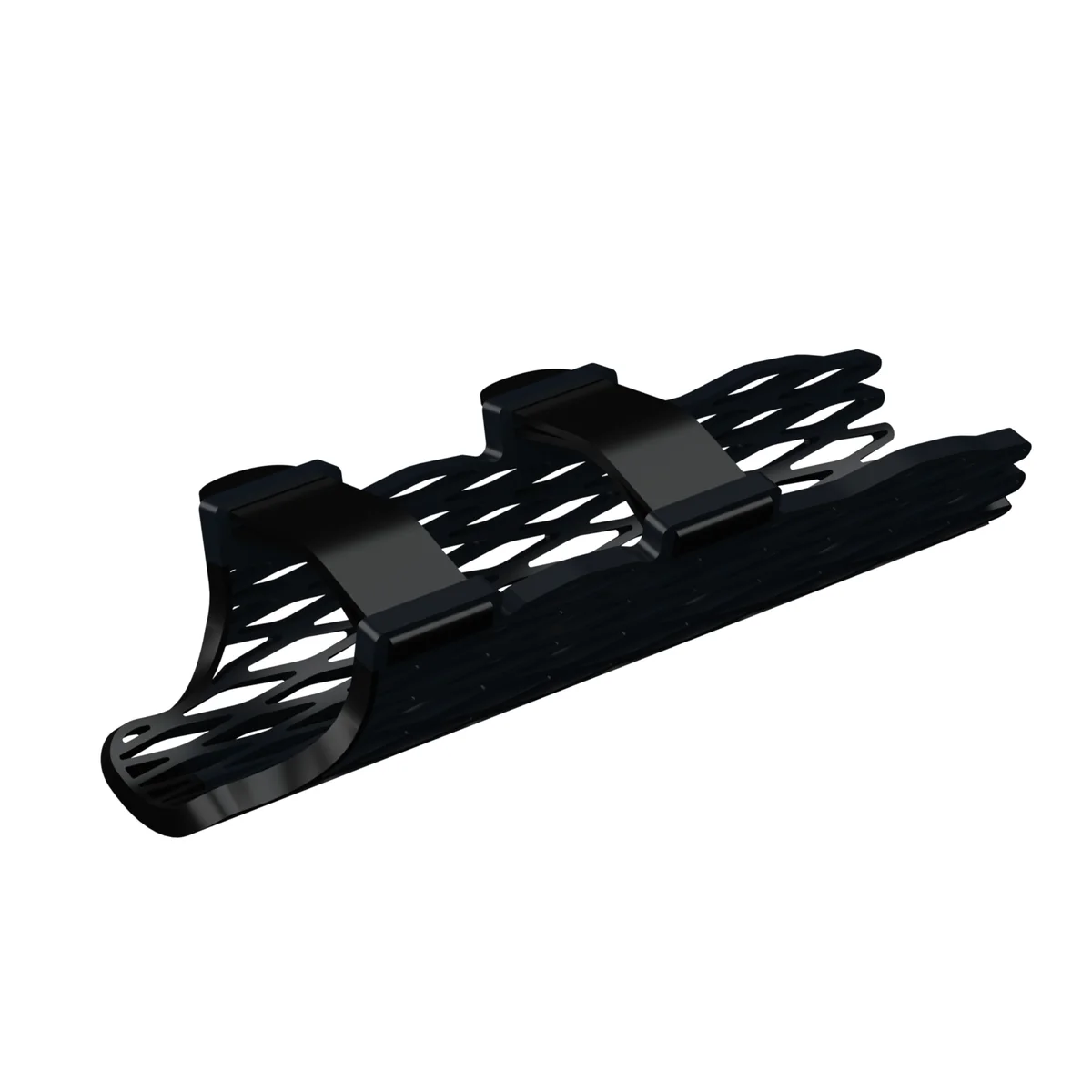
Struxa was founded by Forrest and Quinn Simpson, an engineer and an emergency medicine physician, after they saw a splint category that had barely changed in decades. The company’s first products are finger splints built on Struxaform™ Technology, a patent-pending open lattice designed to provide general-purpose support while remaining lightweight, breathable, and low-profile.
The founding story is not a tale of one dramatic invention moment. It is a meeting of disciplines around an ordinary object that deserved more attention.
Engineering begins by questioning the structure
An engineer can look at a splint and ask what the geometry is doing. Which material contributes to the structure? Which material adds only mass? Can the form be produced as one connected piece? Does the manufacturing method support the intended architecture?
Struxa’s published approach makes those questions visible. The company treats a splint as an engineered structure rather than an accessory. Its lattice places material where support matters and opens the rest of the form for airflow. Additive manufacturing builds that geometry layer by layer from a precision digital model.
This is not engineering as ornament. The lattice is not a technical-looking surface applied to a conventional product. It is the working body of the design.
Clinical perspective keeps the person in the brief
A splint also sits against the body for hours at a time. That fact changes the questions. How does the product meet the skin? Can it remain comfortable through ordinary routines? Is fit understandable? Are care and safety limits clear? Does the product stay within the responsible boundary of general-purpose support?
Struxa describes its foundation as engineering precision grounded in clinical insight. The company is equally clear about what its products are not: they do not diagnose, treat, cure, or prevent disease, injury, or a medical condition, and they are not replacements for professional medical care.
That boundary is part of the design philosophy. Clinical perspective does not turn a consumer product page into medical advice. It reinforces the importance of fit, comfort, wear guidance, and knowing when a question belongs to a qualified healthcare professional.
Five disciplines turn the idea into a product
On its About page, Struxa names five disciplines that shape every product: structure, fit, material, comfort, and craft.
Structure asks the geometry to carry load with the least material. Fit addresses how the form meets real hands and how sizing choices are understood. Material is considered through the needs of lightness, breathability, and washing. Comfort keeps attention on extended everyday contact. Craft brings the product into precise, repeatable manufacturing in Colorado.
Together, those disciplines reveal the value of the founders’ pairing. Engineering and clinical perspective do not occupy separate halves of the product. They keep returning to the same object from different directions.
The result is a demanding brief: the splint must work as a structure and make sense as something a person actually wears.
Under one roof, the disciplines stay close
Struxa operates inside Atlas Product Group, with design, engineering, prototyping, production, packaging, and fulfillment in Colorado under one roof.
This proximity supports the company’s way of working. A digital model is not separated from the printed structure by a distant chain of handoffs. The people defining the geometry remain close to the people producing and handling the product. Packaging and fulfillment are part of the same operational picture rather than invisible steps after design is “finished.”
Keeping those stages nearby shortens the route between a design question and the next physical version. Co-location also keeps the original mix of disciplines present in daily product development.
Finger splints are the first expression
Struxa identifies finger splints as its first product category. They are a concentrated place to apply the company’s philosophy because the object is small, close to the body, and involved in nearly every hand movement.
The open lattice makes the approach legible. You can see the selective structure. You can see the space reserved for airflow. You can see that the form is not based on foam, felt, or bent metal. The product gives physical form to the questions that started the company.
It also leaves room for continued development. Digital design, prototyping, and additive manufacturing remain connected, allowing the team to keep refining details while holding onto the same central brief.
Raising the standard starts with attention
Struxa’s mission is to raise the standard for everyday support. The phrase can sound broad until it is broken into the decisions behind it: structure, fit, material, comfort, and craft.
The founders’ two disciplines gave those decisions a shared table. One asks the product to be structurally considered. The other keeps the realities of body contact and responsible use in view. Neither is sufficient as a slogan; together, they become a way of working.
That is the founding logic of Struxa: support should not feel like an afterthought because the product itself was not treated like one.