 STRUXA

Familiar products gather familiar assumptions. A splint is solid. More material means more support. A 3D print is a prototype. A universal fit leaves no room for choice. A product name tells you when to wear it.
Struxaform™ Technology offers a useful reason to examine each idea. Its patent-pending open lattice is additively manufactured as a continuous structure, designed to stay lightweight, breathable, and low-profile. That does not make every old assumption wrong in every context. It does show that finger support can be designed from a different starting point.
Assumption 1: a splint has to be a solid shell
Solid shells are one way to create structure, not the definition of structure itself.
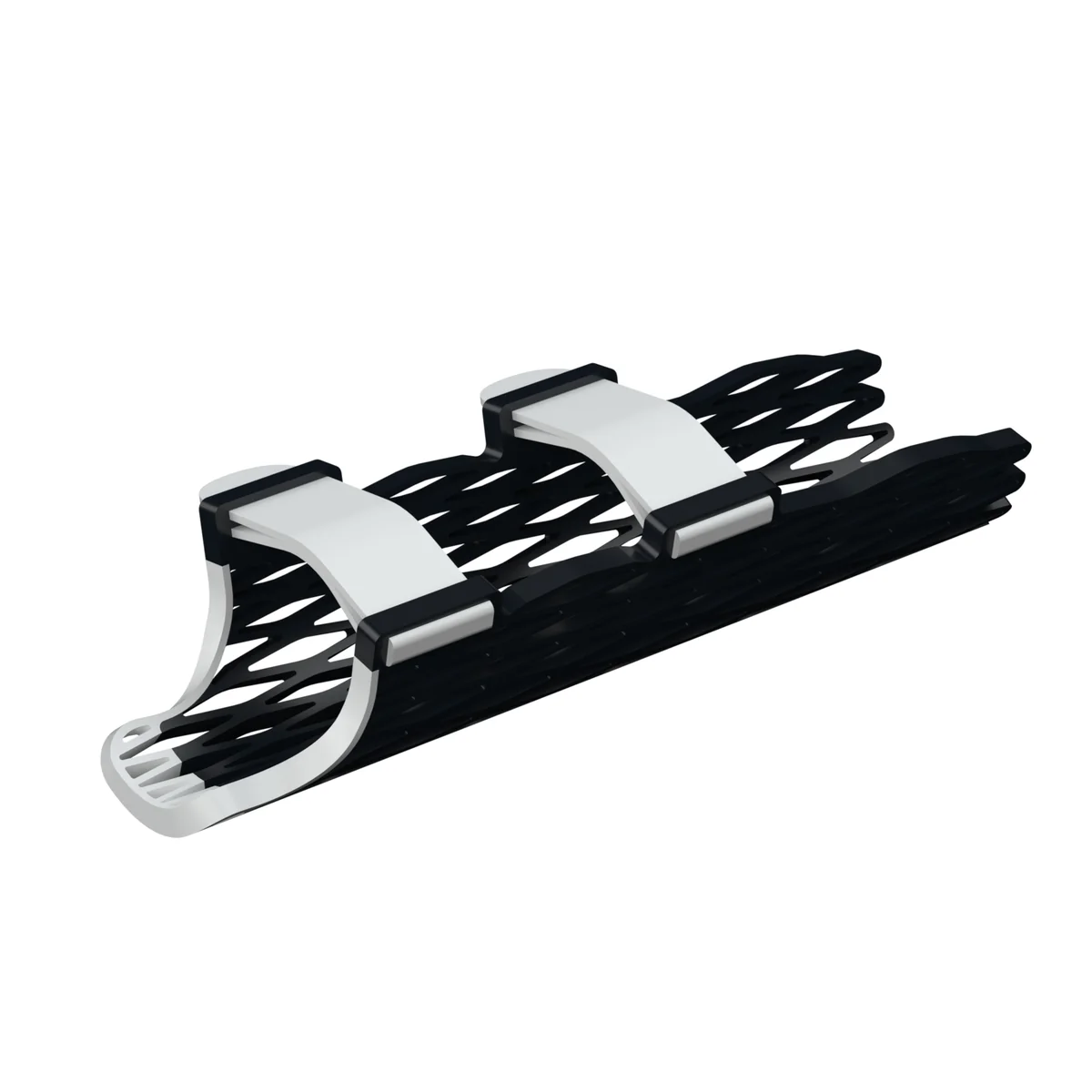
Struxaform uses connected geometry. Material follows the lines designed to provide general-purpose support, while the areas between those lines remain open. The visible lattice is not a cover or a pattern placed over a hidden solid body. It is the architecture.
That creates room for air to move across the skin and keeps unnecessary material out of the form. The splint can therefore be open and structural at the same time.
The broader lesson is simple: do not judge support by how much surface is closed. Look at how the structure is arranged and what the product is designed to do.
Assumption 2: heavier automatically means more supportive
Weight is easy to feel, so it can become a stand-in for substance. Engineering asks a more specific question: is the material in a useful place?
Struxa describes its approach as geometry that carries load with the least material. The lattice concentrates structure where support matters and removes it elsewhere. That makes lightness an outcome of selection rather than evidence that something is missing.
This is not a claim that the lightest product is always the right product, or that weight predicts a medical outcome. It means mass alone cannot explain a design. A lightweight finger splint can still be intentionally structured when its geometry gives the remaining material a clear job.
Assumption 3: 3D-printed means “prototype”
Additive manufacturing is often encountered through early models, hobby objects, or one-off demonstrations. It is also a production method.
Struxa splints begin as precision digital models and are manufactured in Colorado one layer at a time. The process builds the open lattice as a continuous structure rather than creating a temporary stand-in for another manufacturing method.
In this context, “3D-printed finger splint” describes how the product is made. It does not mean unfinished, experimental, or waiting to become a molded version of itself.
The process is especially relevant because the lattice and the method fit one another. Additive manufacturing can produce the connected open geometry directly from the digital design without requiring the form to become a bent-metal frame or a conventional solid shell.
Assumption 4: a simple fit offers no room for adjustment
Struxa uses two different kinds of simplicity.
One-Size-Fits-All is designed as a universal, ready-to-use fit. Trim-to-Size begins oversized and can be shortened gradually to create more customized length and coverage. Both are based on the same open-lattice platform.
The practical difference is not “generic” versus “professional.” It is ready-to-use versus owner-adjusted. A person who wants the simplest start can choose the first; a person who wants to trim the form can choose the second.
Trimming should be gradual: try the splint first, remove a little at a time with clean scissors, re-check comfort and coverage, and smooth rough edges. When the fit relates to pain, an injury, symptoms, or a medical condition, consult a qualified healthcare professional.
Assumption 5: the product name tells you what it treats
The Struxaform™ Full-Finger Splint adds an integrated cushioned backing for contact comfort, and Struxa’s copy sometimes refers to the MCP joint, the anatomical knuckle where the finger meets the hand. That reference describes where a splint sits, not what it treats. It is not a diagnosis, a treatment claim, or an instruction to select the product for a condition.
The same boundary applies to finger splints generally. Struxa products are intended for general-purpose support. They are not designed to diagnose, treat, cure, or prevent a disease, injury, or condition, and they are not substitutes for professional medical care.
If you are deciding whether to use a splint, which product to choose, or how long to wear it, bring the medical part of the question to a qualified healthcare professional. Product pages can explain configurations, fit options, care, and design. They cannot make a clinical decision for you.
Better questions lead to better comparisons
Once these assumptions are removed, more useful questions appear.
How is the structure organized? Where does the design leave room for airflow? Is lightness created through intentional geometry? Is additive manufacturing the production method or merely a prototype step? What kind of fit adjustment does the product offer? Which questions belong to the product, and which belong to a healthcare professional?
Those questions make a modern finger splint easier to evaluate without exaggerating what it can do. Struxa’s lattice is distinctive, but the clearest difference may be its starting point: structure does not have to be solid, bulky, or hidden to be considered.