 STRUXA
Support where it counts.
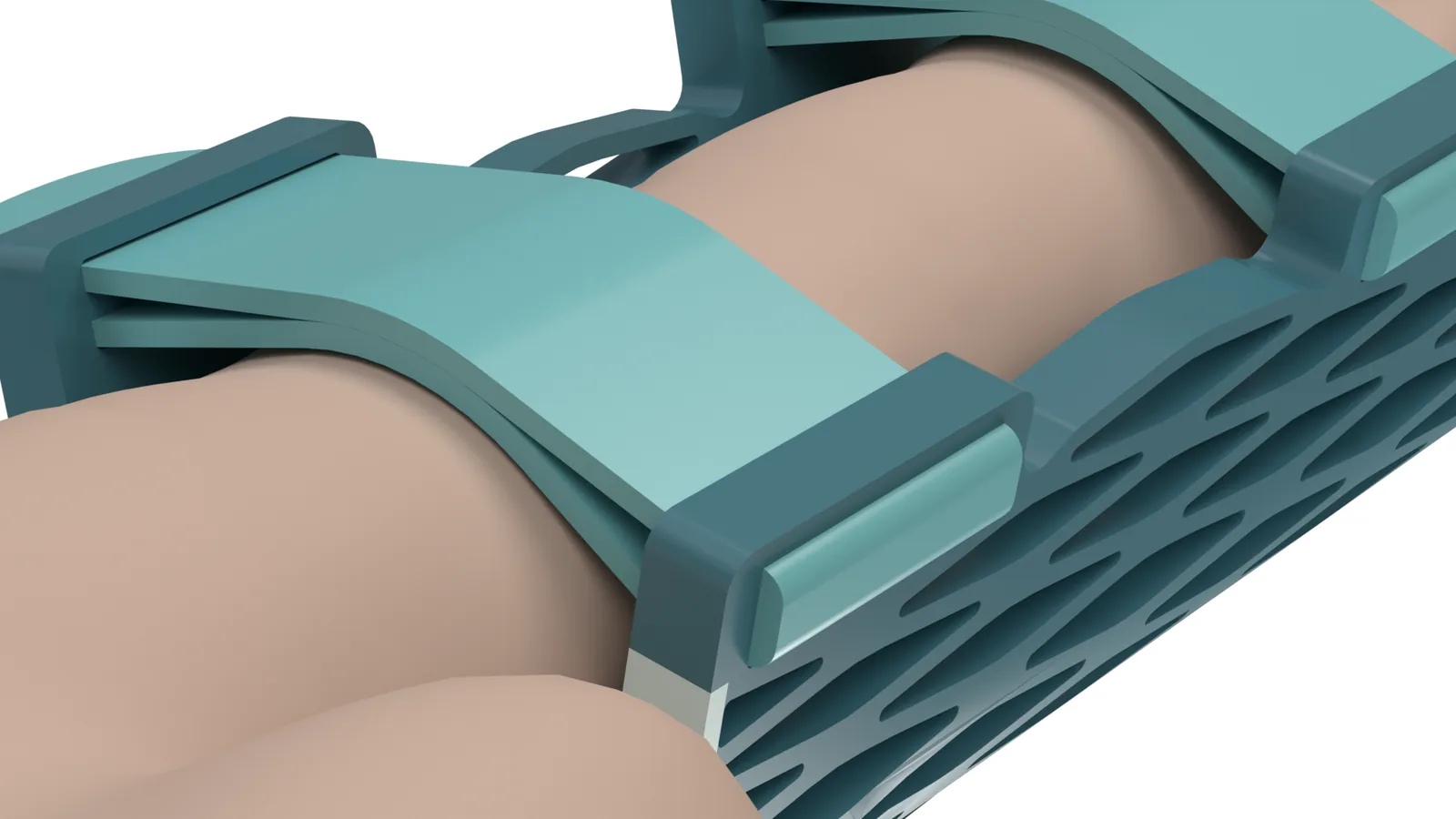
The lattice concentrates material along the lines that keep your finger supported and steady. Everywhere else, it opens up to let your skin breathe.
Struxaform™ Technology
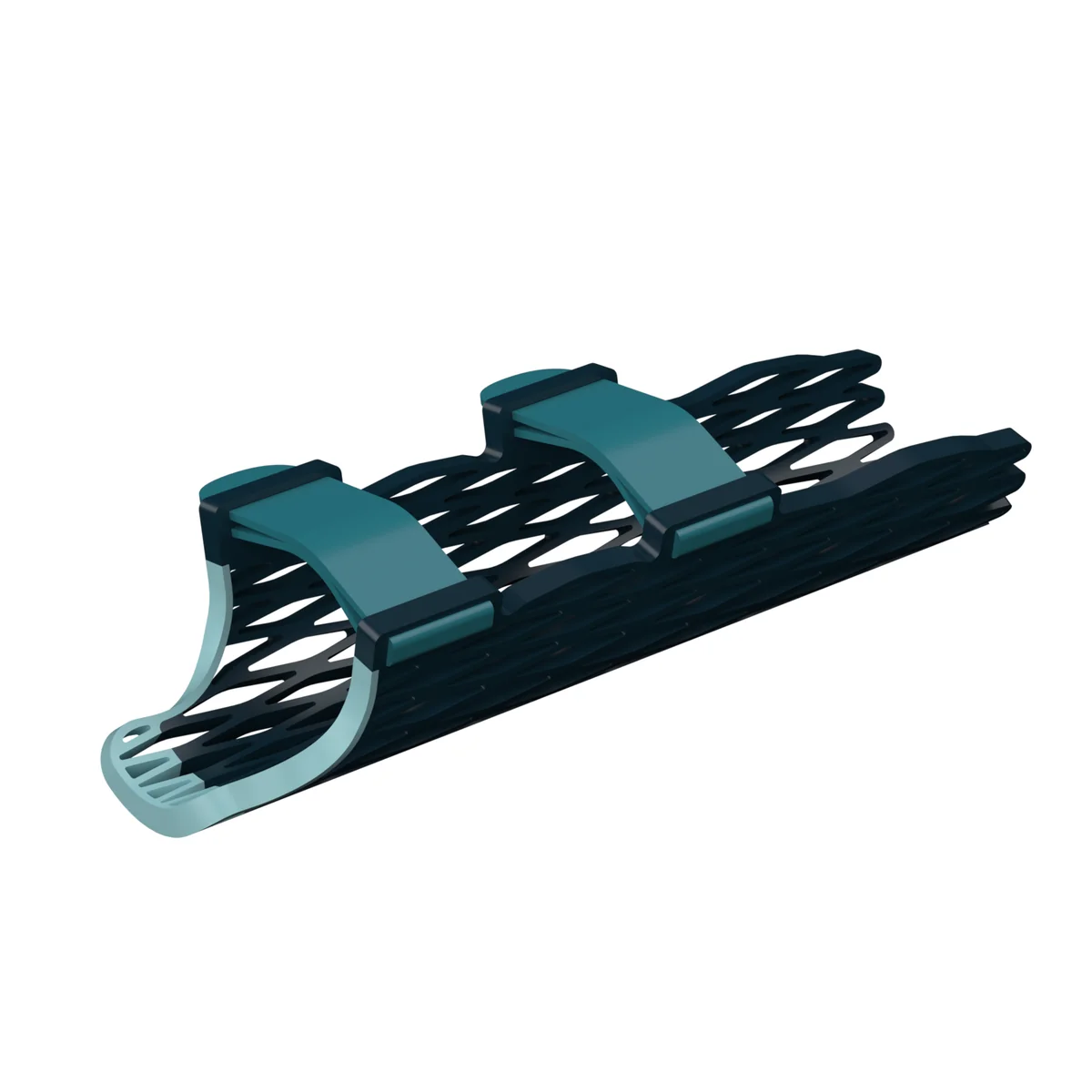
Struxaform™ Technology is our patent-pending, engineered open lattice, printed as one continuous structure.
Fly through the mesh and you'll find no filler. Every strut is doing a job. That's how a splint gets lighter without giving up support.
Material is placed where support matters and removed where it doesn't, so the splint holds firm at the joint while air moves freely across your skin.
The lattice concentrates material along the lines that keep your finger supported and steady. Everywhere else, it opens up to let your skin breathe.
Each splint is additively manufactured one precise layer at a time, building the lattice from the ground up. No molds, no foam, no bent metal. Just structure, exactly where it's designed to be.
Every Struxa splint prints as a single continuous structure: the lattice, the frame, and the strap anchors are all one piece, with no hinges, screws, or glued joints to loosen over time. Fewer parts, nothing to fuss with.
Take a closer look at Struxaform™ Technology: drag it, spin it, switch colorways.
Twilight
Design & manufacturing
Struxa was developed by an emergency medicine physician, with design input from a sports medicine doctor and a hand surgeon. The lattice borrows from aerospace and space engineering, where structure has to do the most work for the least material. Every splint starts as a precision 3D model and prints in Colorado as one continuous piece: no bent metal, no bulky molds, no shortcuts.