 STRUXA
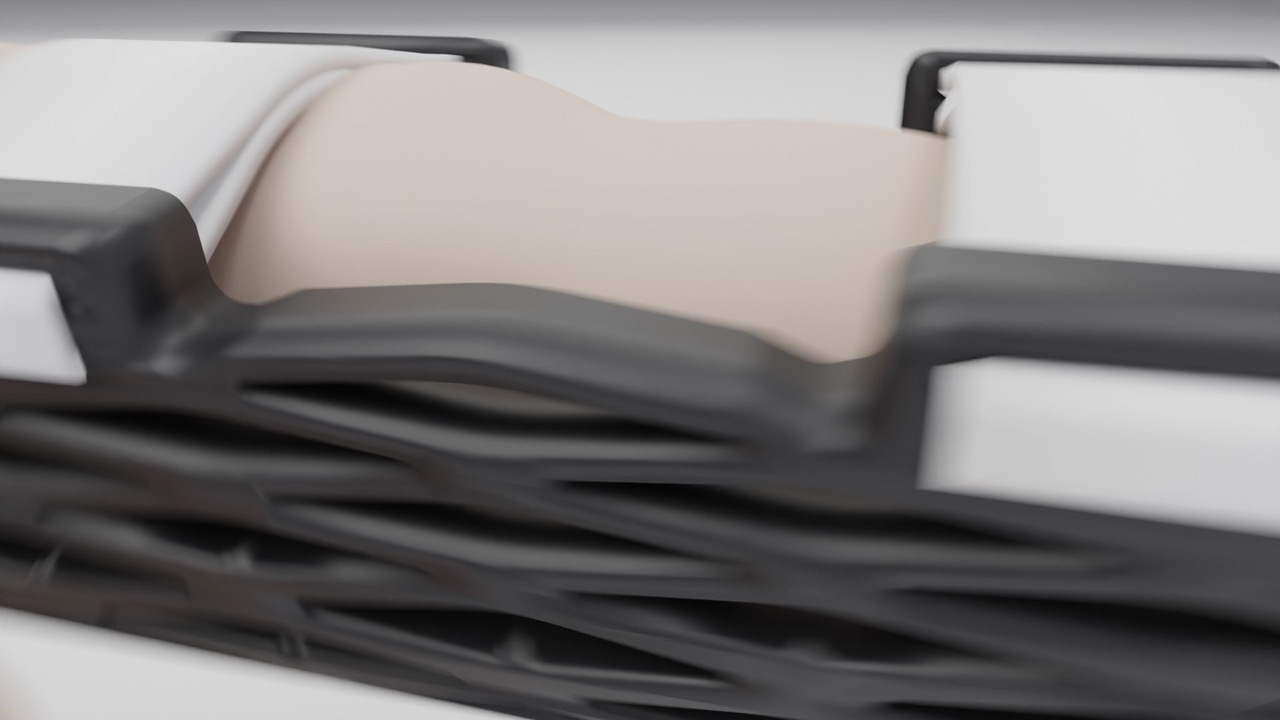
Traditional finger supports tend to be bulky, warm, and closed off. We started somewhere else. A Struxa splint is built on an open lattice — Struxaform™ Technology — where material is placed only where it adds support and left out everywhere else.
Support where it counts
The lattice is engineered so structure follows the shape of the finger. It's designed to hold firm around the joint while staying low-profile along the length of the finger. Nothing extra, nothing heavier than it needs to be. That's the whole point of designing the pattern rather than just carving down a solid shell: every strut is there for a reason.
Room to breathe
Because the structure is open, air moves freely across the skin instead of being trapped under a solid brace. That's what the pattern is built for — comfortable, all-day wear, so the splint feels less like a cast and more like part of your day.
Material where it matters. Air where it doesn't.
Light by design
Removing material where it isn't needed keeps the whole splint light. Paired with our soft straps, it's made to sit close and stay put without weighing your hand down — the kind of support you can wear and mostly forget about.
The open lattice is the idea every Struxa product is built on, from finger splints to EMS lattices. It's patented, engineered, and manufactured in Colorado — and it's why our splints look, and feel, unlike anything you'd get off a mold.